
Tokenized Stocks Are Changing Global Investing: Why Ownership Is No Longer the Only Value
Tokenized stocks are reshaping global investing through direct on-chain equity, SPV-backed assets, and perpetual markets. Here's how blockchain is making traditional finance more accessible while introducing entirely new investment opportunities.

🤖 AI TL;DR SUMMARY
- Tokenized stocks now exceed $1.5B TVL, offering three ownership models: direct equity, SPV-backed tokens, and perpetual markets.
- Ondo, Superstate, and Hyperliquid are leading adoption with 24/7 trading, DeFi collateral, and global accessibility.
- Investors should understand ownership differences before participating as institutional adoption accelerates.
If you live outside the United States and want to buy SpaceX stock...
good luck.
You need a brokerage that accepts your country. A compliant bank transfer route. Investor accreditation in some cases. Weeks of paperwork.
Most people on earth cannot buy a US stock directly.
Blockchain is building workarounds.
And the results are more interesting — and more complicated — than most people realize.
"Tokenised Stock" Is Not One Thing
Everyone uses "tokenised stock" like it means one thing.
It doesn't.
There are three completely different products living under that umbrella. And each one means something different for you as a holder:
Model 1 — On-chain equity registered directly with the company's share issuer. You own the actual share. Your name is on the register.Model 2 — Tokens backed 1:1 by real shares held by an offshore SPV (Special Purpose Vehicle) on your behalf. You own a claim. Not the share.Model 3 — Perpetual futures contracts with no underlying shares at all. You own a position. Nothing else.
Right now, all three versions exist for Nvidia.
Over 650,000 real Nvidia shares back the first two types of tokens.
The perpetual futures version — which has zero underlying shares — trades at 4-5x the volume of the other two combined.
Let that sink in.
Model 1: The Real Thing
Superstate built this. They're an SEC-registered transfer agent that records ownership directly on Solana.
Your name goes on the company's actual shareholder register.
Full voting rights. Dividend eligibility. Legal standing. The whole thing.
Galaxy tokenised its registered equity this way and ran on-chain proxy voting through Broadridge in May 2026. In December 2025, Superstate equities went live as DeFi collateral on Kamino — the first time a regulated equity could be used inside a DeFi protocol.
This is the cleanest model. Most ownership. Most rights.
Also the slowest to scale.
Model 2: Access Over Ownership
This is where most of the TVL lives.
xStocks by Backed issues tracker certificates for 160+ equities through a Jersey-based SPV. Real shares held 1:1. Economic exposure. Dividends rebased directly into your token balance — so instead of a cash dividend payment, your token count goes up.
Ondo does the same for 200+ tokenised stocks through a BVI-based SPV. Crossed $1 billion in TVL within eight months of launch. Less than 24 hours ago, Ondo enabled 24/7 minting and redemption for its most popular tokens — the primary market is now always-on.
The power here is composability.
xStocks are collateral on Kamino and Morpho. You can deposit your NVDAx token and borrow stablecoins against it. Your traditional brokerage account cannot do that.
The same stock, as a token on-chain, becomes a productive financial instrument — collateralising loans, earning trading fees, composing with other DeFi protocols simultaneously.
But here's the honest risk:
You own a claim on an SPV. Not the underlying shares.
PreStocks showed what happens when that breaks. Their pre-IPO tokens collapsed in May 2026 after underlying share transfers were called void — $23 million backing over $1.3 trillion in implied valuation. Evaporated.
Backed and Ondo mitigate this with segregated custody and proof of reserves.
But the risk doesn't disappear. It just shifts from the company to the wrapper.
Model 3: No Ownership. All Exposure.
Hyperliquid's HIP-3 framework lets anyone deploy a perpetual futures market with just an oracle and a funding pool.
TradeXYZ — the leading deployer with over 90% of HIP-3 open interest — runs perps on Nvidia, Tesla, Google, Amazon, and a Nasdaq-100-style index. Ostium on Arbitrum does the same.
No shares. No SPV. No custody. No broker-dealer.
Just an oracle feeding the price and a funding rate keeping the perp tethered to spot.
And traders love it.
Here's why perp volume crushes spot volume every single time:
Building a spot tokenised stock market: you need an SPV, a broker-dealer, a custodian, a proof-of-reserves regime, legal in multiple jurisdictionsBuilding a perp market: you need an oracle
TradeXYZ launched a SpaceX perp that hit $50 million in open interest before SpaceX even filed its S-1.
A wrapped tokenised product cannot move that fast. An SPV cannot source shares that fast.
Speed beats structure in crypto. Every time.
Why People Trade Tokens They Don't "Own"
Most retail shareholders never vote anyway.
Harvard Law School Forum research found only 12% of average retail accounts actually exercise voting rights.
So for a trader in Lagos or Jakarta who wants Nvidia exposure — giving up a vote they were never going to cast is not a real tradeoff.
What matters is:
Can i get exposure to the price movement?Can i use this asset as collateral?Can i trade it when the NYSE is closed and news breaks at 2am?
Tokenised stocks answer all three.
When Nvidia drops chip news at midnight on a Sunday — the perp market prices it in immediately. The NYSE doesn't open for another 33 hours.
For directional traders, the always-on pricing isn't a feature.
It's the whole product.
The Bigger Pattern
The best financial assets throughout history have always let you do more than just hold them.
A treasury bond earns a coupon AND serves as repo market collateralA stock is worth more than price appreciation because it can be lent, margined, used in structured productsA tokenised stock can collateralise loans, earn trading fees, and compose with DeFi — all simultaneously
Blockchain didn't invent this principle. It just extended it to a broader class of assets and a broader class of people.
The same Nvidia stock now serves:
A fund house wanting registered equity for governance ✓A DeFi user wanting a wrapped token for composability ✓A perp trader wanting leverage and 24/7 access ✓
Three different financial opinions. Three valid expressions. One underlying company.
The tokenised stocks market has grown 5x in one year — from $327 million to $1.5 billion in TVL. The DTCC is launching a tokenised securities pilot in October 2026. The NYSE is building a 24/7 tokenised stock trading platform.
The institutional giants are reconsidering infrastructure they've used for decades.
That's not a small trend.
The token can be the asset.
It does not need to be the share.
❓ Frequently Asked Questions
Q:What are tokenized stocks?
Tokenized stocks are blockchain-based digital assets that provide exposure to traditional equities through direct ownership, SPV-backed structures, or synthetic perpetual contracts.
Q:Do tokenized stocks give shareholders voting rights?
Only directly registered on-chain equity models provide legal shareholder rights. SPV-backed tokens generally provide economic exposure without direct ownership.
Q:Why are tokenized stocks becoming popular?
They enable global access, 24/7 trading, DeFi collateral usage, faster settlement, and programmable financial applications unavailable through traditional brokerages.
Q:What is the difference between Ondo, Superstate, and Hyperliquid?
Superstate focuses on registered on-chain equity, Ondo issues SPV-backed tokenized stocks backed 1:1 by real shares, while Hyperliquid offers synthetic perpetual markets without underlying ownership.
Q:Are tokenized stocks safe?
Safety depends on the model used. Direct ownership provides the strongest legal protection, while SPV-backed products introduce custody and issuer risks. Synthetic perpetual markets offer price exposure but no ownership rights.
Why Trust YourWeb3Guy
Our team of researchers and analysts deliver data-driven insights backed by on-chain analysis, market data, and years of crypto-native experience. Every article is independently reviewed for accuracy before publication.

Follow YourWeb3Guy
.jpg&w=3840&q=75)
Taiwan Passes First Comprehensive Crypto Law, Reshaping Asia's Web3 Regulatory Race

New York Life Brings $807B On-Chain: RWA Tokenization Pushes DeFi Into a New Institutional Era

Circle Stock Crashes 17.5% as Open USD Threat Grows: Full Breakdown

Visa, Mastercard, BlackRock & Coinbase Launch Open USD Stablecoin, Challenging Circle's USDC Dominance
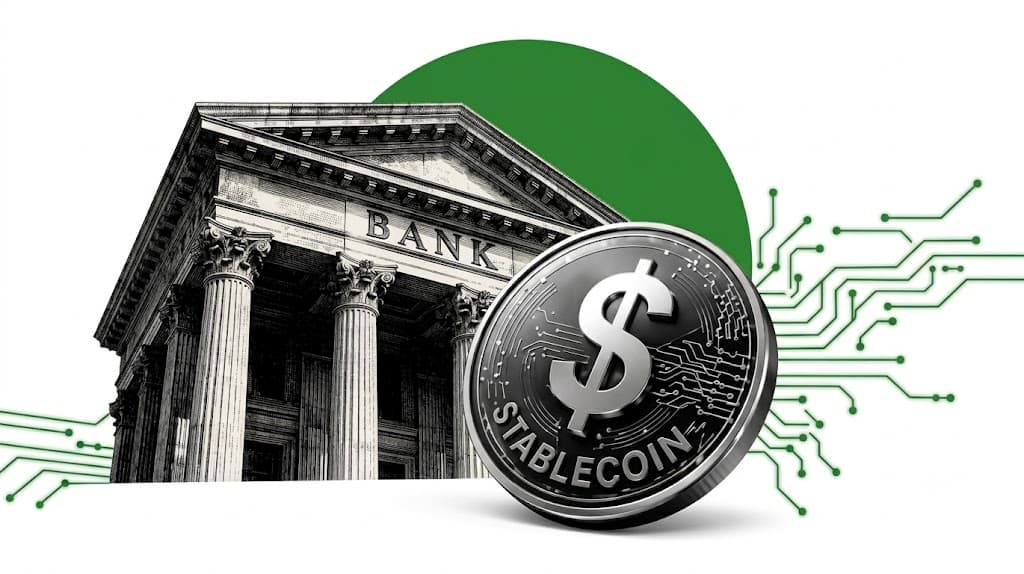
Bank 4.0 Review: Why Stablecoins Are Rebuilding Banking From Scratch
Never Miss Alpha
Get custom research directly to your inbox weekly.
Related Articles
New York Life Brings $807B On-Chain: RWA Tokenization Pushes DeFi Into a New Institutional Era
New York Life Investment Management has launched its first tokenized fund on-chain with Centrifuge, bringing $807B in institutional credibility to DeFi and accelerating the Real World Asset (RWA) revolution.
Circle Stock Crashes 17.5% as Open USD Threat Grows: Full Breakdown
Circle stock plunged 17.5% after Open USD emerged as a major stablecoin competitor while Russell index removal triggered forced selling. Here's what happened and what investors should watch next.
Bank 4.0 Review: Why Stablecoins Are Rebuilding Banking From Scratch
A deep review of Bank 4.0 exploring why stablecoins, blockchain infrastructure, and Web3 are rebuilding banking from first principles.
Akash Kumar Jha
With over 4 years of experience, I specialize in breaking down complex Web3 and crypto concepts into clear, actionable content. From deep-dive technical explainers to project documentation, I help brands educate and engage their audience through well-researched, developer-friendly writing.