
Let’s rewind to 2023.
PulseChain, a promising Ethereum fork, launched with big dreams:
- Faster transactions
- Lower fees
- A vibrant ecosystem
But by late 2024, it was on life support.
- Fees (24h): Just $48,370
- Price: $0.00003582 (down 89% from its 2023 peak)
- Volume (24h): A measly $18K
Critics called it a “ghost chain.”
Developers avoided it
Then, in early 2025, everything changed.
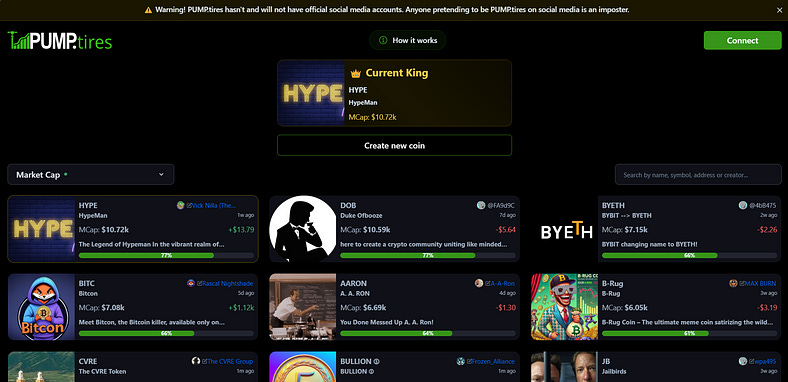
A meme-powered app called pump.tires lit the fuse.
Here’s how it happened — and how you can copy this playbook to revive your own blockchain.
The Pump.tires Effect on Pulsechain.com
Pump.tires — a clone of Solana’s viral Pump.fun platform — launched on PulseChain.
Suddenly, users could create and trade meme coins in seconds.
Here’s how it revived the chain:
1. The Buy-and-Burn Engine
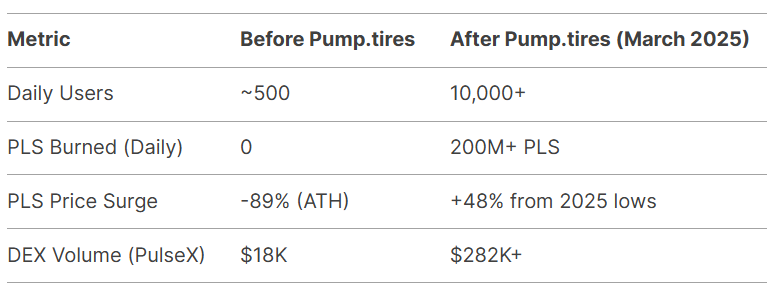
Every meme coin transaction on Pump.tires burns 1% of the chain’s native token, PLS.
This simple rule did two things:
- Reduced Supply: Over 200 million PLS were burned in March 2025 alone, creating scarcity.
- Price Stability: PLS surged 48% from its 2025 low, with a market cap hitting $505 million.
2. Liquidity Explosion
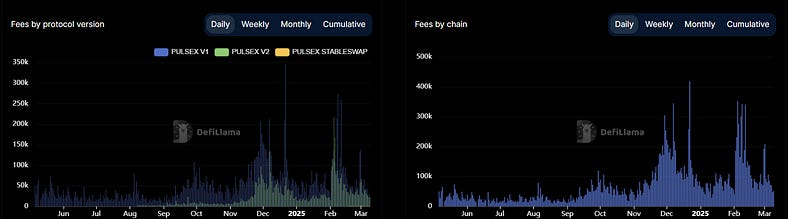
New meme coins like $PUMP funneled liquidity back into PulseChain’s ecosystem:
- PulseX (PulseChain’s DEX) saw daily volume jump from 18K to 282K.
- The PUMP/WPLS liquidity pool grew to $8.5M, attracting traders from Solana and Base.
3. Viral Community Growth
PulseChain’s social channels exploded:
- Discord members tripled.
- Developers began building apps like fiat on-ramps and prepaid crypto cards to support new users.
Suddenly, PulseChain wasn’t a ghost town anymore.
Why Meme Coins Are the Ultimate Lifeline?
PulseChain.com isn’t unique.
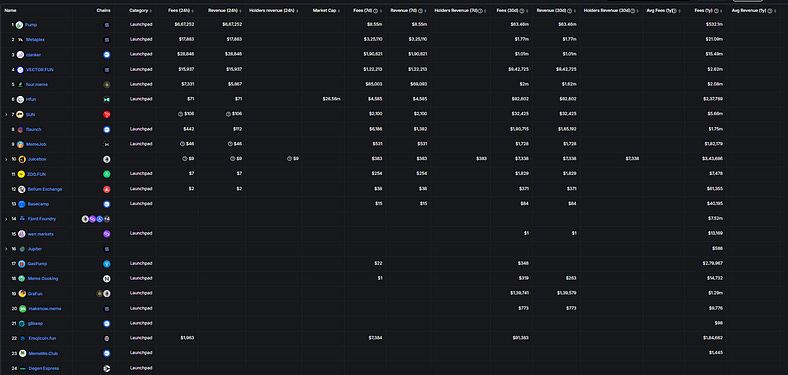
Chains like Solana and Base have ridden meme frenzies to success. here are few launchpads:
Here’s why this strategy works:
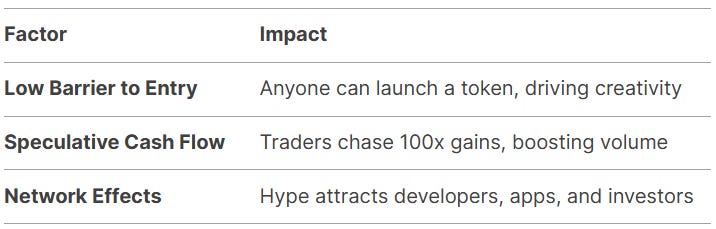
But there’s a catch: “meme coins are volatile.”
Pump.tires faced accusations of being a “scammer’s playground.”
Yet, PulseChain’s team leaned into the chaos, using the influx to fund long-term tools like stablecoin bridges and governance upgrades.
The Dark Days Before the Meme Wave
Before Pump.tires, PulseChain’s problems ran deep:
- Stagnant Development: Only 12 dApps were live by late 2024.
- Token Confusion: Users struggled to differentiate PLS, PLSX, and other ecosystem tokens.
- Regulatory Fear: The SEC’s lawsuit against founder Richard Heart scared away institutional players.
Pump.tires didn’t fix these issues overnight.
But it bought PulseChain time — and attention — to rebuild.
How Your Chain Can Replicate This Success
If your Ethereum Layer 2 (EVM chain) or non-EVM Chain is struggling, here’s a roadmap:
1. Deploy a Meme Coin Factory
Use a pre-built solution like Pump.fun clone to launch quickly.
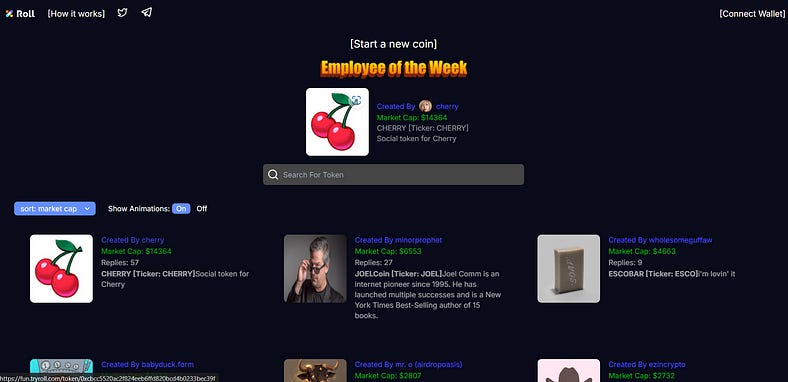
Key features:
- Token creation in <60 seconds.
- Built-in buy-and-burn mechanics for your native token.
- Liquidity auto-staking into your DEX.
2. Fuel the Hype Cycle
- Partner with influencers to host meme contests.
- Airdrop rewards to early adopters.
- Share success stories (e.g., “This trader turned 100 into 50K”).
3. Convert Hype into Infrastructure
PulseChain used meme-driven fees to fund:
- PulseX V2: A faster DEX with concentrated liquidity.
- StableSwap: Low-slippage stablecoin trading.
The Risks (And How to Mitigate Them)
Meme coins are risky, but smart chains plan for it:
- Rug Pulls: Audit meme projects or flag unaudited tokens.
- Volatility: Use a portion of fees to stabilize your native token’s price.
- Reputation Damage: Balance memes with “serious” projects (DeFi, NFTs, RWA).
PulseChain’s revival wasn’t just luck — it was strategy.
The Future of PulseChain (And Lessons for You)
Today, PulseChain is a case study in community-driven revival.
Analysts compare its trajectory to Solana’s 2023 rebound, fueled by BONK and Dogwifhat.
Your move?
- Test a meme platform risk-free: Roll Protocol’s Live Demo.
- Customize the codebase for your chain’s needs.
- Need help with customization, connect with me.
LinkedIn | Telegram | Website
Meme coins aren’t the endgame — they’re the spark.
PulseChain lit the match.
Now it’s your turn.

Leave a comment